Architecting Authority

8 Questions Under 3 Minutes No Signup Free Forever

Is Your Business Ready to Grow Without Ads?

8 questions that reveal whether your growth system compounds on its own or collapses the moment you pause spend.

0 — 35 Digital Tenant
36 — 65 Building
66 — 100 Growth Ready
1 / 8
1
Select an answer to continue
0 / 100
Your Score
Biggest risk area

Scores change as your system matures. Reassess every 90 days.

Book a Strategy Session →
Why this assessment exists

Most businesses do not have a marketing problem. They have an ownership problem.

Every lead they generate is rented from a platform that can change its algorithm, raise its prices or disappear tomorrow. The business has built growth that does not belong to it.

This assessment measures exactly how exposed you are. It looks at paid dependency, organic visibility, content investment, CAC trajectory, conversion infrastructure, and AI presence. Eight questions. One honest answer about where your growth system actually stands.

The result is not a vanity score. It is a diagnosis. And diagnosis is where the sprint starts.

Stage Score What it means What to do
Digital Tenant 0 — 35 Growth stops when spend stops. Pipeline depends entirely on paid platforms. Fix the ownership problem before scaling any further.
Building 36 — 65 Foundation is forming. Some owned assets exist but growth is still partially rented. Accelerate the elements that are still rented. Prioritise content and conversion.
Growth Ready 66 — 100 Acquisition is compounding. Organic demand grows month on month. CAC is stable or declining. Scale the system. Paid ads amplify what already works.
Alokk's perspective
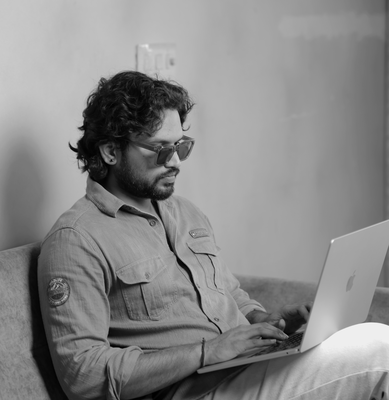
Alokk, Founder at Groew
Alokk Founder and Lead Growth Architect, Groew
The most expensive mistake in growth is scaling paid ads before your organic foundation is ready. I see it repeatedly. A founder gets their first few customers from ads, decides it is working, and doubles spend. CAC climbs. The sales cycle gets longer. Churn ticks up. None of that is an ads problem. It is a foundation problem. The website does not convert well enough. The brand is not recognised enough. The content does not build enough confidence before the sales call. When we fixed those three things for a professional services firm before recommending they scale spend, their close rate went from 18% to 34% within 60 days. Then scaling made sense.

Common questions

A free 8-question diagnostic that measures how exposed your business is to paid platform dependency and how ready your growth system is to compound without ongoing ad spend. Takes under 3 minutes and requires no signup.
A Digital Tenant is a business that rents its audience from platforms it does not control. Pause the ads and the leads stop. Most founders with under three years of consistent content investment are Digital Tenants, even if they do not realise it.
A standard SEO audit looks at technical website factors like page speed and keyword rankings. This assessment measures something broader: how exposed your entire pipeline is to platforms you do not control. It is a business health check, not a technical website review.
If you score below 36, fix the ownership problem before scaling spend further. Between 36 and 65, accelerate the elements that are still rented. Above 65, scale the system. Book a strategy session to get a specific sprint plan for your situation.
Meaningful improvement takes 60 to 90 days of focused work. Fixing the highest-scoring gap first, whether that is content, conversion, or CAC visibility, typically moves the score by 10 to 20 points in the first quarter.
No. Paid ads and organic presence are not opposites. The goal is to reduce how dependent you are on paid, not to eliminate it. When your organic foundation is strong, paid ads accelerate results rather than substitute for them.
From Groew's Performance Systems Team

Are You Ready to Scale? The Four Foundations That Determine Growth Readiness

Scaling paid ads before your organic foundation is ready is one of the most expensive mistakes in growth. This guide explains the four infrastructure layers that determine whether paid investment will compound your results or just inflate your CAC.

Why the Order of Investment Matters

Growth infrastructure has a natural build order. Each layer depends on the one below it functioning correctly. Paid ads amplify what already works. If your organic foundation is weak, ads amplify the weakness, not the strength.

The business that scales paid before fixing conversion architecture does not get more customers — it gets more expensive traffic to a site that does not convert well. The business that builds organic authority first, then adds paid to an already-converting system, sees a fundamentally different result.

Read the complete guide

Foundation 1: Conversion Architecture

Before you spend a dollar on acquisition, your landing pages and sales process must convert at an acceptable rate. For B2B, a well-positioned landing page receiving qualified traffic should convert at 3 to 8% depending on the ask (free audit vs. direct booking). Below 2%, you have a positioning or messaging problem that ad spend will not fix.

Signs your conversion architecture needs work: high click-through from ads but low form submissions, sales calls where prospects seem confused about what you do, or inconsistent messaging between your homepage and service pages. Fix these first. The cost of fixing is small. The cost of scaling traffic to a broken funnel is substantial.

Foundation 2: Brand Recognition

Buyers who recognise your brand before seeing your ad have dramatically higher conversion rates. B2B buyers, in particular, research heavily before engaging. A brand with recognisable content, a strong LinkedIn presence, and third-party mentions closes at 2 to 3x the rate of an unknown competitor with the same ad budget.

The practical test: ask five prospects who recently converted how they heard of you before the first touchpoint. If every single one says "the ad," you have minimal brand recognition. If any say "I saw your content on LinkedIn" or "a colleague mentioned you," you have meaningful brand building happening. Scaling before you have any brand recognition means every sale is harder and more expensive than it needs to be.

Foundation 3: Organic Baseline

Organic traffic provides a proof-of-concept for growth. If you are generating any customers organically, it confirms that the market exists, your positioning resonates, and your website can convert without the artificial boost of targeted ad traffic. These are the three things paid ads assume are true. If none of them are proven, ads are running on unverified assumptions.

You do not need significant organic traffic before scaling paid. You need enough to confirm the fundamentals work. Even 10 to 20 organic conversions in the last 90 days is evidence enough to begin amplifying with paid. Zero organic conversions means the fundamentals are unproven.

Growth Readiness and Revenue Infrastructure

The Growth Readiness Assessment maps to exactly this framework. High scores on conversion architecture and organic baseline mean you are ready to scale. Low scores mean the return on paid investment will be limited until those foundations are built.

Groew's approach to Revenue Infrastructure is to build all four foundations systematically before recommending paid scale. The organic search infrastructure establishes the baseline. The conversion architecture is designed and tested. Brand recognition is built through content and distribution. Then paid amplifies a system that already works — and the result is substantially lower CAC than attempting to scale with foundations still under construction.

ESC