No page architecture
Articles published without knowing which buyer questions they must answer or which commercial pages they should support. Volume accumulates. Pipeline does not.

Architecting Authority
Most businesses do not need more articles first. They need to know which buyer questions are unanswered, which pages should support enquiries and where proof must be added before content can earn trust.
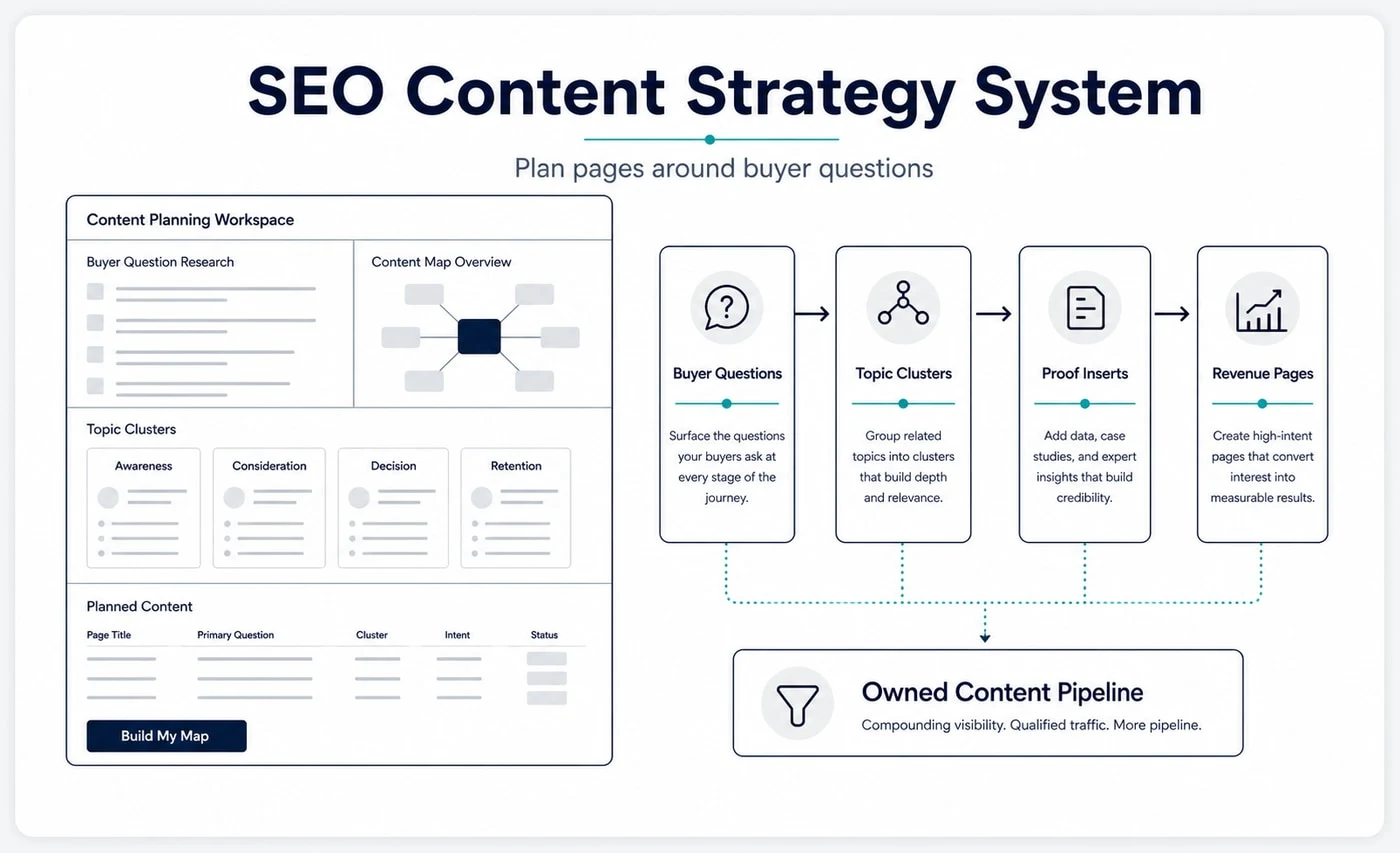
A content strategy system built around buyer questions, topic clusters, proof inserts, and revenue pages.
Articles published without knowing which buyer questions they must answer or which commercial pages they should support. Volume accumulates. Pipeline does not.
Pages rank but do not convert because competitors can copy the content. No data, case evidence or field notes that only your company can provide.
Topic clusters exist but links do not flow authority toward service and commercial pages. Guides rank. The pages closest to revenue stay weak.
Pages not structured for AI extraction. No answer blocks, no entity clarity, no proof AI systems can verify. The content exists but is not a citable source.
Every buyer question categorized by problem, comparison and decision phase before a single brief is written. The map shows what pages must exist and in what order.
Page-level search intent, proof inserts, internal link requirements and CTA defined before writing starts. Writers cannot produce commodity content from these briefs.
Which old pages to update, merge or remove so weak content does not quietly dilute the whole system. The plan connects to Search Console impressions data.

When I audit a content system, I usually find enough content. The missing piece is direction. Pages answer isolated keywords instead of buyer doubts, and the strongest proof sits outside the article that needs it. In the industrial SaaS story, structure changed the outcome. Category pages and topic clusters matched how niche buyers searched, and users grew 367% over 17 months. That is why I treat content strategy as Revenue Infrastructure, not publishing activity.
When content already exists but performance has dropped, content refresh and recovery identifies which pages to update, consolidate or remove before new content is commissioned. The Mumbai SEO services page shows how a city page can use buyer questions, service clusters, proof, FAQs and retention paths instead of repeating the city name.
Groew will map the buyer questions your site does not answer, the commercial pages that need proof and the refresh list that clears dead weight before new content is commissioned.